
Introduction
You look at your dog and he looks at you. His coat is not tidy, his paws are not clean and you know that he needs attention. And we have all been there, have we? The dog needs a grooming. It is not only aesthetics, but also because of health, comfort of the dog and even some bonding time.
You can get the fanciest shampoo or the softest brush but without a plan, you will not succeed. It is an extremely popular grooming tool and she can wiggle, he can run and it can be a battle. Your plan will be successful.
We will do this together. You will find the most useful grooming tools. You will realize how to groom and in what order. I will also share my calming strategies with the most nervous dogs. It is not a chore, as you will see, but a fun bonding time and an experience.
“A brushed dog is a happy dog, but a groomed dog is a healthier one.”
The German Shepherd is strong and smart. It works in police and military roles. The Cavalier King Charles Spaniel is gentle and fits in families. The Golden Retriever loves play and grows into a loyal friend.
Why Grooming Matters
You may ask, why do anything? Can’t dogs remain natural?
But, consider this:
- Dirt accumulates.
- Furred matted can drag sorely at the flesh.
- The long nails hurt them when walking.
- Bad ears have the ability to smell and get infected.
According to American Kennel Club (AKC), grooming prevents formation of painful mats, and also aids in distributing the natural oils and skin wellbeing. ASPCA also mentions that neglecting to groom your animal may result in ear and paw infection.
According to a report by Pet Product News (2024), over 65 percent of the U.S. dog owners bathe their dogs in their homes at least once a month. You aren’t alone if you try.
I have heard of dogs that have gone months without being groomed. His mats were so tight they rubbed him raw. She had nails so long, and they curled. It broke my heart. That will not happen to ours.

Essential Tools for Dog Grooming
What tools to use? What you need to begin the process is what you have to show me. Each of the tools has its purpose, and the following is a list of what I find important.
Brushes and Combs
- Slicker brush. good on long-coated breeds.
- Bristle brush. best with short haired dogs.
- Undercoat rake. should have when your dog sheds.
- Metal combine. to tangle a brush.
The AKC recommends that you brush your dog such as Golden Retrievers daily, though short haired dogs not less than weekly. I own a Husky and it was only the undercoat rake that could deal with the shedding.
Clippers and Scissors
- Various bladed clippers.
- Ear and paw trimming grooming scissors.
- Natural finish with thinning shears.
According to the 2023 survey by Groomer to Groomer Magazine, poor-quality clippers are the main cause of accidents as compared to other grooming tools. I had an inexpensive clipper that got caught on the fur of my dog and he naturally could not sit there. Lesson learned.
Nail Trimmers
- Guillotine style.
- Scissor style.
- Grinder (electric file).
It’s possible some dogs may dislike the sound a grinder makes. He may jump. She may bark. Some dogs, however, prefer the sound. It may mean a new, smooth, nail. The American Veterinary Medical Association (AVMA) says overgrown nails cause dogs to change the way they walk. This may cause problems in the dogs joints.
Bathing Tools
- Dog shampoo (not human — their skin is different).
- Conditioner for long coats.
- Towels and a blow dryer.
I shall warn you here. Don’t use your shampoo. Their skin has a different pH. The AVMA explains that human shampoo strips away protective oils and causes dryness. Always use one made for dogs.
Ear and Teeth Care
- Ear cleaning solution.
- Cotton pads (never sticks).
- Dog toothbrush and paste.
The American Veterinary Dental Society states that 80% of dogs three and older show signs of dental disease. I’ve seen it in one of my rescues. He had rotten teeth at four because a toothbrush was never used.
Quick Checklist
- Slicker brush
- Comb
- Clippers
- Grooming scissors
- Nail trimmer
- Dog shampoo
- Ear cleaner
- Toothbrush
Keep these ready, and you will always be set.
The Saint Bernard is huge and needs space. The Mini Bernedoodle can live in small places if trained. The Dachshund has health risks, but you can prevent many.

Maximum Process of Grooming
Now comes the fun part. Let’s walk through it.
Step 1: Brushing
Start off with brushing. It is important in the removal of the tangles, dirt and loose hair.
- Take the appropriate brush to the dog.
- Go at a slow pace to make sure that he is not spooked.
- Always brush towards growth.
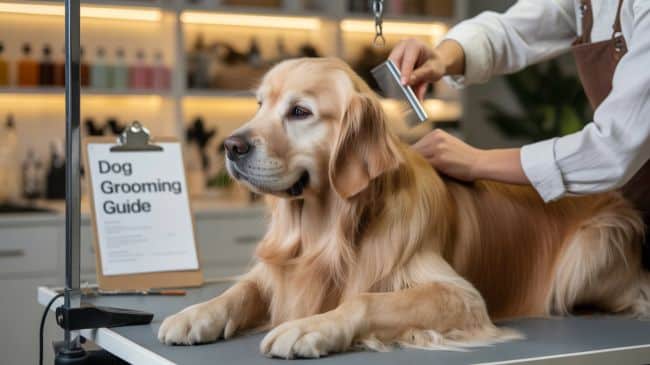
I have once brushed a golden retriever that had not been fashioned in several months with a comb. The mats were miniature ropes. Half an hour later I had done it, and as I got up, she wagged her tail again as though she were a free animal.
Step 2: Bathing
After brushing it is time to bathe.
- Use lukewarm water.
- Fully wet the coat.
- Apply some shampoo and rub it into the hair.
- Rinse thoroughly. (The coats will be irritated with the soap left in them.)
- Put some conditioner, should there be need.
- Dry the dog using towel then blow dry with low heat.
No individual dog would fail to shake water everywhere and some dogs attempt to flee. This is part of the fun!
The AKC recommends that a healthy dog takes a bath after every 4-6 weeks, unless he becomes dirty.
Step 3: Nail Trimming
Your caution is appreciated.
- Maintain loose hold to their paw.
- Trim just a bit at a time.
- Don’t clip the quick.
When I had a dog he hated this part. He would attempt to take his paw back. I was taught to give him a reward to enable him to permit me to trim only one nail at a time. And gradually he started to trust me.
Step 4: Ear Cleaning
- Pour a bit of solution on cotton.
- Wipe gently.
- Never push deep.
You need not have to push it. If you do, call the vet. Washing the ear is preventative, however, ear infections still require a vet. The ASPCA makes this point.
Step 5: Teeth Care
- Toothpaste of the dog.
- In circles, gently brush it.
- Limit this to couple of minutes at a time.
It might be a battle at the start of it, but you can practice it. My pets are used to it, and one of my dogs would be really excited to get a brushing session as a reward when I was applying chicken-paste flavored.
Step 6: Hair Trimming (if needed)
- Sensitive spots should be cut with scissors.
- Clippers for the body.
- Go slow, steady, calm.
Other breeds such as Poodles and Shih Tzus require regular trims in order to prevent mats. The AKC even provides breed-specific grooming directions of show coats.
Grooming Frequency by Coat Type
| Coat Type | Examples | How Often to Groom |
|---|---|---|
| Short coat | Beagle, Boxer | Weekly brushing, bath every 6–8 weeks |
| Double coat | Husky, German Shepherd | Brushing 2–3 times a week, bath every 4–6 weeks |
| Curly coat | Poodle, Bichon | Daily brushing, trims every 4–6 weeks |
| Wire coat | Terrier breeds | Weekly brushing, hand-stripping every few months |
I once had a Beagle. He maintained himself low in that respect, and a brushing once a week was enough. A friend of mine had a Poodle which was another thing. She was to be swept every day, or mats had a way of growing very fast.
Rottweiler puppies need early training. The Goldendoodle learns fast and loves tasks. A dog DNA test helps you know breeds and health risks.
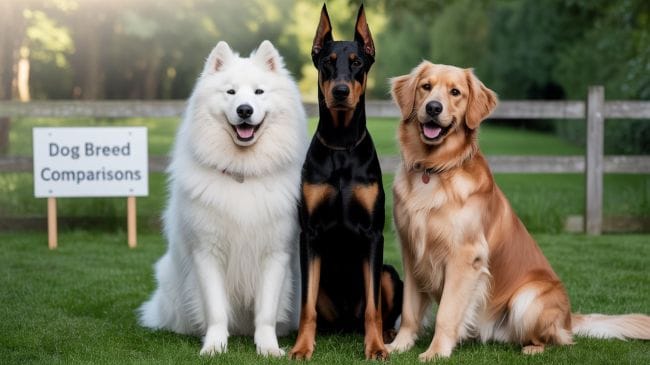
Each breed has different grooming needs.
- Huskies: Heavy shedders. Particular brushing is needed during shedding season.
- Poodles: These curly haired dogs require professional haircuts. Bulldogs: The folds in the skin should be washed, otherwise infected.
- Yorkies: Yorkies are known to have fine hair that gets messy, hence requiring to brush daily.
- Golden Retriever: It has to have a coating of thick hair and undercoat that pokes.
Each breed has its own and different peculiarities. Being aware of the type of coat your dog is will enable you to make preparations.
Common Mistakes One Makes When Grooming.
It may sound like grooming is an easy task, but there are a thousand mistakes that can be made.
- The problem of having nails that are too short is widespread.
- Hot air dryers are not recommended because they might burn the dog, it is advisable to use low setting only.
- Always leave a second coat, it covers too.
- It is not advisable to brush mats too fast as it may hurt the dog.
- Do not use human products on animals.
AVMA does not recommend shaving of two coats either. It won’t help the dog cool off. It will in fact strip the sun of insulation and protection.
Cost: DIY vs Professional Groomer
Let’s be honest. Money matters.
| Service | Average Professional Price (USD) | DIY Cost |
|---|---|---|
| Bath & Brush | $40–$60 | $10–$20 (shampoo, brush) |
| Full Groom (bath, haircut, nails) | $70–$120 | $40–$60 (tools) |
| Nail Trim | $15–$25 | $10 (clippers) |
| Teeth Brushing | $10–$20 | $5 (dog toothpaste) |
Frequent grooming is another way of saving money on the DIY. However, there come the instances that you need professional grooming.
Myths About Grooming
Let’s bust a few myths.
- “The dogs keep cool in summer by shaving.” – False. It exposes them to sunburn.
- “Short haired dogs do not require grooming.” – False. They also shed, are still in need of baths.
- “Dogs hate grooming.” – Not always true. They can take pleasure in it with patience.
There was one Labrador that I knew who despised baths. However, he loved it when his owner began putting peanut butter on a lick mat when bathing him. See? It’s about technique.
Pros and Cons of Home Grooming
| Pros | Cons |
|---|---|
| Saves money – You don’t pay salon prices. | Takes time – Grooming can take hours. |
| Builds bond – He trusts you more. | Can be messy – Water, fur, shampoo everywhere. |
| Convenient – You can do it anytime. | Risk of mistakes – Cutting too short, missing spots. |
| Better control – You know his needs best. | Not for all breeds – Some coats need pro skills. |
Conclusion
You now have the knowledge. You have the tools. You shall not feel lost again. Grooming isn’t just a task. It is caring, it is love, it is responsibility.
He will wag his tail. She will look brighter. They will all feel better. And you? You will be smiling when you see the difference.
The next time you see your dog, and he sees you, with his untidy hair, and dirty paws,– you can tell him,–“Don’t worry. I’ve got this.”

FAQs
How frequently is my dog supposed to be groomed?
It depends. Some need weekly brushing. Others just monthly baths. The doubles lose their fur, and require more attention.
Is it possible to apply human shampoo to a dog?
No. Their skin is different. Always use dog shampoo. (AVMA, 2023)
What would happen in case I cut the quick when clipping nails?
Stay calm. Stop the bleeding with styptic powder. In case it does not stop, call your vet.
Are short-haired dogs to be groomed?
Yes. They still require brushing, bathing, checking their ears and trimming their nails.
Is there a difference in grooming my dog when it is hot or when it is cold?
Yes. In summer, lighter trims help. During the winter you may leave the coat long.
Is it okay to groom puppies?
Yes, but start slow. The AKC advises having the introduction of brushes and clippers at early age so that they become accustomed to them.
What do I do to make my dog calm during grooming?
Use treats, toys, or a lick mat. Keep sessions short. Remain composed–they reflect your powers.
How do I know when to see a pro?
When the mats are too tight, the coat is too complicated, or your dog is a beau–hire a groomer.
References
- American Kennel Club (AKC) – Dog Grooming Basics
- ASPCA – Pet Grooming and Care Tips
- AVMA (American Veterinary Medical Association) – Pet Care Guidelines
- American Veterinary Dental Society (AVDS) – Dental Health for Pets