

Introduction
You like your dog, I like my dog, as well. And as we are well, they like a routine. Life is peaceful when a dog is aware of what is expected of him on a daily basis. They sleep, eat, and remain healthy. It is not about being strict. It is having a comfortable and balanced dog.
Now, think about it. How do you feel when you miss a meal or sleep in or forget to take some water? Probably cranky, or tired. The same happens to dogs. Their bodies are dependent on patterns as well. Eating at the correct time, walking at the correct time and sleeping when necessary. Easy, yet the most efficient method of creation of a rhythm.
“A regular routine is the support of the physical and emotional well-being of a dog.”
When you look at dogs, you see how different they are. The German Shepherd has courage and can work in police or military jobs. The Cavalier King Charles Spaniel has charm and will fit well in a family. And the Golden Retriever has love for play and people, which makes it a joy to raise.
The Connection Between Routine and Happiness
A dog with no routine will be stressed. You can see a little bit of chewing, barking or chewing the floor. Nevertheless, as soon as you create a schedule (even a flexible one), your dog feels cuddled. They are aware that you are coming, there will be food on the table and an ordinance party.
This isn’t about perfection. I can tell that I miss routines occasionally, too. A consistency day in day out though, will build trust, which will later translate into happiness.
What You Can Learn in this Guide.
This is a step by step guide on:
- Morning habits that start the day right.
- Feeding and exercise basics you can follow.
- Grooming, training, and bonding ideas.
- Vet care essentials for long-term health.
At the conclusion of the guide, you will have a full routine of the two of you. It will not be strict and complex. It will be the care of the dogs that will be practical and you will be capable of.
Morning Routine: Setting the Tone for the Day
Why Mornings Matter
The way mornings unfold can affect one’s mood. Dogs are no different. They can handle some stress, but an entire day of chaos can be overwhelming. In contrast, if some order can be relied on, stress can be dealt with in a more manageable way. This is why more that some thought should be given to your dog’s morning routine.
Hydration and Quick Health Check
A dog needs access to water clean water. While some bowls can be left to clean themselves, some need to be filled, cleaned, and emptied on a regular basis. Water bowls can also be filled for the day. This is also a good time to observe some health signs. Slow or stiff movement? Observe for stiff movement for a few seconds to save a vet visit later.
Quick Morning Health Checklist
🐾 Daily Dog Care Checklist
Bathroom and Breakfast
After your dog has hydrated, he/she requires going to the bathroom. There are those dogs that are able to wait and those that are not able to and those that can wait it is good to give them the chance to ease the day a bit first. Now it is breakfast time. This is to be sustained again; same time, same portion. This will not only ensure your dog does not have stomach problems but also prevents the aspect of begging.
A Gentle Start Builds Trust
You will not have to hurry up in the mornings and a brisk walk, some moments of connection with your dog, or even a quick brush will make the dog feel safe. It is similar to telling them, Hey buddy, it is going to be a good day.

Exercise & Play: How to Keep Your Dog Active and Happy.
The Why-Movement Is Non-Negotiable
Stagnation will result in boredom. Bored dogs chew up shoes, bark like mad dogs and dig up your yard. It is even the most effective means of burning mental energy. After a good walk or a game you will see that your dog changes his mood and behavior.
Walking Everyday: Not So Much as Potty Breaks
Another thing is that you can walk with your dog and have a chance to learn about their surroundings. Every sniff is a page of the morning newspaper and that is why even short walks are significant. Explore the alternatives and perhaps even include a jog so that you can occupy your dog.
Types of Exercise and Their Benefits
| Activity | How Often | Benefits for Your Dog |
|---|---|---|
| Walks | 1–2 times daily | Keeps joints healthy, prevents obesity, gives mental stimulation |
| Fetch/Chasing | 10–20 mins | Builds muscle, improves agility, strengthens bond with you |
| Tug-of-War | Few times a week | Great for mental challenge, teaches self-control |
| Training Games | 5–10 mins daily | Sharpens obedience, boosts confidence |
| Off-leash Play | Weekly if safe | Socialization, freedom, pure happiness |
Playtime at Home
You don’t always need a park. The living room has a rope toy that miraculously works. Or a feed puzzle, which causes them to hunt after their food. I have heard of collected dogs becoming excited detectives when they are presented with a sniffing game. It’s fun for both of you.
Balance is Key
Excessive exercise might damage young pups and older dogs. Too little and energy gets out in ugly ways. You will get to know what your dog can take. Some need hours of play. Others simply desire a nice walk. Observe, observe and watch their body.
Now think about size and space. The Saint Bernard has a giant body and will need more room than most homes give. The Mini Bernedoodle can live in an apartment if you train it well. And the Dachshund has health risks, but you can manage them with care.
Diet and Nutrition Essentials: Feeding Your Dog the Right Way
Why Food is more than Just a Meal
We both know–you and I both know–that what you put in your dog will be reflected in his or her strength and in his or her skin and even his or her temper. A dog fed on bad food will appear pale and will perform slowly. But the right diet? Streaky hair, stable vitality, radiant eyes. The medicine is disguised as nutrition.
What makes a Balanced Diet
The food that a dog eats should include all the essentials: protein, healthy fats, and vitamins, as well as minerals. Missing one of them skews out the entire machine. You would not live on fries every day, right? And so with dogs–they can be balanced and not filled.
Key Elements of a Healthy Dog Diet
- Proteins: Build the muscles and assist in repairing the body (chicken, fish, beef, lamb).
- Fats: Energy, sheen (fat in fish, chicken, flax seed).
- Carbohydrates: It contains good energy and fibers to be digested (brown rice, oats, sweet potato).
- Vitamins and Minerals: Build Strong bones, good blood and defence.
- Water: It is never out of stock.
How Much and How Often?
Puppies eat more often. Adults should have 1-2 meals a day and can take small meals more frequently. I tend to tell, obey your doctor, and also believe in your own eyes. When your dog is slim and energetic, then you are doing it right. When the weight of your dog is on the rise, then it is time to change the portions.
Treats and Extras
Treats are good and I do use them as well particularly in training. They must, however, be not more than 10 percent of the daily food. You will end up with a lazy dog in case you treat him too much. Labels should always be looked at, some of the treats are covered with sugar bombs.
The Role of Supplements
Not all dogs require them, but others do, and a big difference may be achieved when they are done in the proper manner. Some of them include joint supplements of older dog, omega-3 of skin, and probiotics of digestion.

Grooming Routine: Keeping Your Dog Clean and Comfortable
Why Grooming Is More Than Looks
Grooming isn’t vanity. It’s health. You are not only keeping your dog clean when you brush, bathe or even look at the nails, but you are keeping them safe. Skin issues are covered with a matted coat. Overgrown nails cause pain. Bad breath? It can mean hidden disease.
“Good grooming is good health in disguise. What you see on the outside often tells the story of what’s inside.”
– Dr. Laura Simmons, Vet & Canine Specialist
Brushing and Coat Care
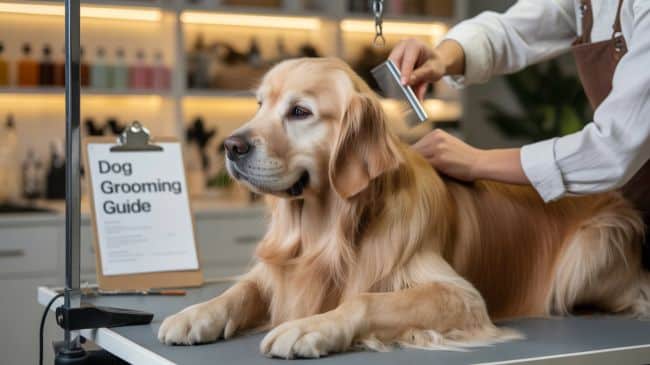
Every coat type has its needs. A German shepherd sheds every day, a Poodle has to be trimmed. You will see that your dog will relax even when Brushing. It does not only maintain it, it interrelates. And it saves fur that flies all through your house.
Bathing Basics
Dogs don’t need daily baths. Excessive soap deprives the natural oils. Most of them can do a month, as long as they do not roll in mud (and they will). Always use dog shampoo. Human products are too harsh.
Minor Stylistic Devices.
- Nails: Trim every 3–4 weeks. Long nails affect posture.
- Ears: Cleaning, e.g. floppy-eared breeds.
- Teeth: Brushing teeth every now and then helps to save money on expensive vet bills in the future.
- Eyes: wiping tear-stains or discharge.
Making Grooming Stress-Free
Go slow in case the dog does not give in. Treats help. A calm voice helps even more. Grooming is not a struggle as time goes by. And of course, when your dog gets to know it is good, they will even like it.
Training and health always matter. Rottweiler puppies have to learn early so they grow up confident. The Goldendoodle has brains and will learn fast if you stay consistent. And a dog DNA test can give you facts about breeds and health so you know what to expect.
Training & Mental Health: Building a Happy, Balanced Dog
Why Mental Health Matters
Dogs need to exercise and to be mentally stimulated. A body is not necessarily more important than a tired mind. A dog may get anxious, bored or even destructive in the absence of mental stimulation. In order to fight this, training and play offer order, challenges and feeling of safety.
Training as Bonding
Obedience is not the only reason why training is employed. It is also in a communication purpose. The process of teaching a dog a trick includes talking to an animal and this creates trust. The dog also gets to learn how to look at its trainer as a leader thereby improving the bond between them.
Mental Stimulation Ideas and Benefits
Signs of a Healthy Mind
A dog that has been stimulated mentally is compliant and happier. They meet you with a wagging tail that is very happy rather than restlessly whining. When they are busy, they can relax and when you call, they can engage.
Keep It Fun
Remember that training should be not a punishment. Treats, praise and play are very crucial to include. Three to four minutes in a few, rather than one, long exhaustive, session are more effective than one long, exhausting session during the day. It is thankful to implement training in your and your dog’s lives.
Evening Wind-Down: Ending the Day Calmly
Why Evenings Matter
And evenings, just like mornings, fix the day and fix the rest. An excellent wind-down schedule will make your dog calm down. It also helps in increasing your bond. Consider it as a quality time in the end of a hectic day.
Quiet Time and Last Walk
Evening walks are not necessarily long. Other times it can be nothing more than a brisk walk to stretch your legs and have your dog welcome the day. This is also their walk time that allows them a bathroom break before going to bed. You will also find your dog is slower, smells more. It’s their way of winding down.
Gentle Grooming Before Bed
One swab or squeeze before going to bed is more than soothing, it is also healthful. Oils are redistributed by brushing and their coat is soft. Also it will allow you to inspect lumps, ticks, or irritation.
Short Story: my Evening with Max.
I have a Labrador named Max. Night after night we repeat the same thing. One ten minutes walk, a brush, and fifteen minutes joint time on the couch. It is the end of day and Max is aware of that. He rests peacefully. And I sleep watching him safe and well maintained.
Establishing a Relaxing Environment.
Keep their bed in a quiet spot. Soft lighting. No loud noises. A relaxed evening would allow night anxiety to be avoided. A little bedtime treat can work with some dogs as well, this is a means of telling them that they have done a good job that day.
Vet Care & Health Monitoring: Staying Ahead of Problems
Why Regular Vet Visits Matter
You may believe that your dog is healthy and so you do not need to have a visit to the veterinarian. But dogs are the best at concealing pain. Frequent examinations help in the detection of issues earlier in life. It is necessary to visit at least once a year or every six months.
Immunizations and Palliative Care.
Dangerous diseases are kept off with vaccines. The issue of flea, tick and worm prevention is important as well. They are not mere trifles, but things you need to keep your dog healthy throughout its life. Their absence would result in expensive subsequent treatments.
Signs You Should See the Vet
You know your dog best. When one experiences sudden shifts in appetite, energy or behavior, it is a clear indication that something has gone amiss. Limping, coughing or over scratching are some of the indicators that you cannot overlook.
“Preventive care is the best gift you can give your dog. It’s easier to keep them healthy than to fix problems later.”
– Dr. Mark Reynolds, Canine Health Specialist
Keeping a Health Log
I like to keep a simple log. Records about weight, dieting, bowel movements, mood, provide your vet with valuable information. It is as if they are providing them with the entire picture rather than making assumptions of what is ailing them.
Partnering with Your Vet
Think of your vet as a partner. Share observations. Ask questions. Talk about supplements or diet modification. The greater the amount of communication, the better your dog is taken care of.
Pros & Cons: Daily Routine for Your Dog
A positive strategy is not just about structure. It is about how your dog’s health and happiness, as well as your bond with your dog, are influenced. However, as the say, every thing has its pros and cons. Let us examine this in more detail.
| Pros of a Daily Routine | Cons of a Daily Routine |
|---|---|
| Better health – Regular feeding, exercise, and grooming keep your dog in peak condition. | Less flexibility – Rigid schedules may be tricky on busy days. |
| Reduced anxiety – Dogs feel secure knowing what comes next. | Adaptation issues – Sudden changes in schedule can stress your dog. |
| Improved training results – Consistent times help reinforce good habits. | Possible monotony – Dogs may get bored if the routine is too predictable. |
| Stronger bond – Daily activities give you more shared time. | Time commitment – Maintaining a routine takes effort. |
Finding Your Balance
Each day does not necessarily need to be ideal. You do not have to follow a definite time. This is to be consistent, not inflexible. In case you skip a walk or switch a feeding interval, then it does not matter. The important thing is that caring should become a habit.
Conclusion: Caring for Your Dog Every Day
Your dog does not simply stay in your house. They live in your heart. It is not a daily routine that has rules. It is about establishing a comfort, health and trust.
You are not merely keeping your dog alive, you are providing them with regular care: feeding, exercise, grooming, training, visits to the vet, etc. You’re helping them thrive. You are creating a relationship through love and trust.
Imagine it in this way; your dog is with you every day. That makes you their world. One way of saying it is a routine, I have got you.
It doesn’t have to be perfect. But it should be thoughtful. And little by little those little habits. They bring a happy, long and healthy life to your dog.
Let’s make it simple. Start with one habit. Add another. Keep going. Sooner than you expect it your dog will have a routine she/he believes in – and so will you.
FAQs: Dog Health Care Basics
How often should I walk my dog?
You are supposed to take your dog out at least once in a day and two shorter walks are better. It makes them healthy, stimulated mentally and contented. More may be required by puppies and energetic breeds.
How many times should I feed my dog a day?
Eat a well-balanced diet in protein, fats, carbs, vitamins, and minerals. There should be continuous supply of fresh water. Snacks are okay but they must not be more than 10 percent of their daily calories.
Which is the frequency of grooming my dog?
It is based on the breed and the type of coat. Brushing may be required on a daily basis to long haired dogs and once or twice a week to short haired dogs. They are normally bathed once every month unless they are dirty.
What would I do to know whether my dog is stressful or not?
Symptoms such as excessive barking, chewing, pacing, lack of appetite, or abnormal behavior are the signs. In case of changes, pay attention to your dog, change habits, and refer to the vet, when necessary.
What is the most appropriate way to begin the day routine?
Start small. Select one habit week such as walking in the morning or brushing in the evening and continue doing it throughout the week. Then add another. Perfection is a lesser matter compared to consistency.
External References:
- American Kennel Club – Dog Care Basics
- PetMD – Daily Dog Care Tips